Clutch or Fold: The Brain Science Behind Why Some Players Rise When It Matters and How You Can Train That Response
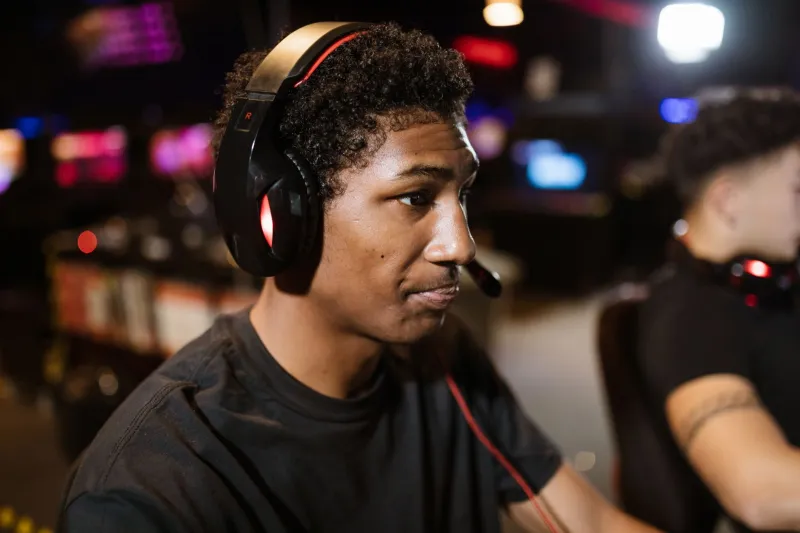
You've seen it happen. A player who dominates ranked all week walks into a tournament match and looks like they've never touched the game. Hands shaky, aim drifting, decisions half a second too slow. Then there's the other guy — same stakes, same pressure — who drops a 1v3 clutch like he's warming up in a private lobby.
The easy explanation is "mental fortitude" or some vague idea of a clutch gene. But sports psychologists and esports coaches who work with competitive teams have a more precise answer, and it comes down to how your nervous system is wired to respond to threat — and how that wiring can be changed.
What's Actually Happening in Your Brain When You Choke
When your body perceives high stakes, your sympathetic nervous system kicks into gear. Heart rate spikes. Cortisol floods your system. Blood flow shifts away from the prefrontal cortex — the part of your brain responsible for decision-making, impulse control, and processing complex information — and toward more primitive, reactive systems.
In evolutionary terms, this was useful. In a tournament match, it's a disaster. The prefrontal cortex is exactly where you need blood flow when you're running a complex retake or calculating a trade situation. When performance anxiety triggers that threat response, you're literally making yourself dumber at the worst possible moment.
Choking isn't a character flaw. It's your nervous system doing its job incorrectly for the context. The brain can't distinguish between a lion and a losing scoreboard — it just sees threat and responds accordingly.
Why Clutch Players Aren't Fearless
Here's the part that surprises most people: the players who perform best under pressure aren't necessarily experiencing less stress. Research in sports psychology consistently shows that elite performers feel the same physiological arousal as everyone else. The difference is in how they interpret it.
This concept — called arousal reappraisal — is one of the most well-documented interventions in performance psychology. When you tell yourself "I'm nervous," your brain frames that arousal as a threat. When you tell yourself "I'm fired up," the same physiological state gets framed as readiness. The body doesn't change. The story you tell about it does.
Esports coaches at the top level actively work this into pre-match routines. Instead of trying to calm players down — which can actually reduce performance by dropping arousal too low — they help players redirect that energy toward focus and aggression. The goal isn't to eliminate the feeling. It's to own it.
The Choker vs. the Clutch Player: A Practical Breakdown
Coaches and sports psychologists who work with competitive gamers have identified some consistent behavioral patterns that separate players who fold from players who deliver. Understanding which side you're on is the first step to shifting it.
Chokers tend to:
- Focus on consequences rather than process ("If I lose this round, we're out" vs. "Read the angle, take the duel")
- Over-monitor their own mechanics under pressure, which disrupts automated skills
- Experience time distortion — rounds feel faster, decision windows feel smaller
- Ruminate on previous mistakes mid-match instead of resetting between rounds
Clutch performers tend to:
- Default to process cues — small, specific actions that pull attention into the present moment
- Trust practiced mechanics rather than consciously controlling them
- Use ritual and routine to create psychological consistency regardless of stakes
- Treat high-pressure moments as separate from the overall match narrative
None of these are fixed personality traits. They're habits, and habits can be built.
Training Routines That Actually Rewire the Response
This is where ShootYalla players can actually do something with this information. Sports psychology isn't just theory — it produces concrete training protocols that translate directly to competitive gaming.
Pressure inoculation training. The most effective way to perform under pressure is to practice under pressure. This means deliberately creating high-stakes conditions in your training environment. Play with money on the line with friends, even small amounts. Record yourself and watch it back. Jump into unfamiliar ranked lobbies. The goal is to accumulate reps where the stakes feel real, so your nervous system learns that threat signals don't require a full panic response.
Breath control as a reset tool. Between rounds, a slow exhale (longer than your inhale) activates the parasympathetic nervous system — essentially a manual override on the stress response. Competitive players who use breath work aren't doing yoga. They're using a physiological tool to bring cortisol down fast enough to think clearly in the next round. Four seconds in, six seconds out, two or three cycles. That's it.
Process cue anchoring. Identify two or three specific, small actions that bring your attention into the present. It could be checking your crosshair placement, verbalizing your position out loud, or a physical gesture like tapping your desk. These cues act as anchors that pull your focus away from outcome anxiety and back into executable tasks. Build them in practice so they're automatic when pressure hits.
Post-round reset language. What you say to yourself between rounds shapes your neurological state going into the next one. Replace "I'm throwing this" with "Next round, I hold the angle and wait." The brain responds to specific instructions, not emotional assessments. Give it something actionable.
Building the Routine Before the Tournament Starts
None of this works if you try it for the first time at a tournament. These are skills that need to be rehearsed the same way you rehearse utility lineups or retake patterns. Work them into your weekly grind deliberately.
The players who show up clutch when it counts aren't born different. They've put in reps on their mental game the same way they've put in reps on their aim. The nervous system is trainable. The responses are adaptable. And the gap between the player who folds and the player who closes out the round — it's smaller than you think, and it starts in practice.
You've got the mechanical tools. Start building the mental ones.