AK or M4? How Weapon Patch Wars Are Quietly Rewriting the Rulebook for Competitive Shooters
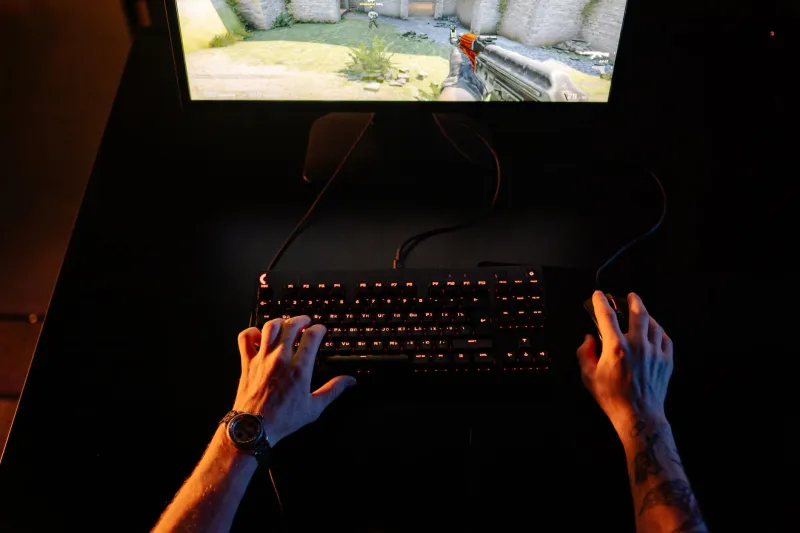
Picture this: you've spent three months grinding your M4A4 spray pattern into muscle memory. You can pull that recoil down in your sleep. Your counter-strafing is clean, your crosshair placement is sharp, and your rifle is finally an extension of your hands rather than a liability.
Then the patch notes drop.
Suddenly the M4A4's rate of fire is adjusted, the AK's first-bullet accuracy gets a nudge, and every tier-one team's demo file from the next tournament looks completely different from last month. Your three months of work didn't disappear — but the landscape you built it on just shifted.
This is the reality of playing competitive shooters in 2024. And understanding why it happens, and how to respond, separates players who adapt from players who complain in all-chat.
The AK-47 and M4 Aren't Just Guns — They're Philosophical Statements
In CS2, the AK-47 and M4 series represent more than weapon choices. They're the backbone of competitive play and a lens through which Valve's balancing philosophy gets tested in real time.
The AK has always been the aggressor's weapon. One-shot headshot potential through helmets, a more punishing spray pattern that rewards players willing to put in the hours, and a price point that makes it economically central to T-side strategy. The M4, meanwhile, is the CT's answer — more forgiving, quieter, and designed for a playstyle built around holding angles rather than creating them.
When Valve adjusts either weapon, they're not just tweaking numbers. They're nudging the entire philosophy of how rounds should be played. A more accurate AK rewards aggression. A buffed M4 makes holding even stronger. These decisions cascade.
Recent CS2 updates have sharpened the spotlight on this dynamic. Adjustments to spray patterns — specifically the vertical and horizontal pull sequences that skilled players memorize — have forced even veteran players to relearn sequences they'd automated years ago. For pros, that's a serious disruption. For ranked grinders, it can feel like the rug got pulled out completely.
How Pro Play Absorbs the Shock First
Here's the thing about weapon balance changes: the professional scene is simultaneously the most affected and the most equipped to adapt. Tier-one teams have dedicated analysts, coaches, and practice regimens that can absorb a meta shift in days rather than weeks.
After a significant patch, pro teams will spend hours in private servers running spray transfer drills against the new recoil curve. Analysts pull data from scrimmages to identify which weapons are now over- or under-performing at specific engagement ranges. By the time a major tournament rolls around, the best teams have already formed a consensus on the new meta — and that consensus gets broadcast to millions of viewers who then carry it into their own ranked queues.
This top-down influence is real and measurable. Watch how quickly a weapon's pick rate spikes in Premier or Faceit lobbies after it gets showcased at a big LAN event. Players see what works at the highest level and replicate it. The problem is that pro-level play involves layers of coordination, economy management, and positional awareness that make certain weapon choices viable in ways they simply aren't in solo queue.
That AK rush that worked beautifully in a coordinated five-stack? It falls apart when your teammates don't know the timing. Copying the meta without understanding the context of the meta is one of the most common mistakes competitive players make.
Reading the Spray: What Actually Changed and Why It Matters
For players trying to adapt to recoil changes, the first instinct is usually to jump into a deathmatch server and start blasting walls. That's a reasonable starting point, but there's a smarter approach.
Focus on the shape of the new spray pattern, not just the pull direction. CS2's recoil curves have both a vertical component (almost always upward, requiring a downward mouse pull) and a horizontal component (the left-right deviation that kicks in after the first several bullets). When Valve patches a weapon, they often adjust the horizontal deviation timing more than the vertical lift — meaning your downward pull might feel the same, but your side-to-side corrections are now off.
Practical drill: go into a community workshop map designed for spray training, spray a full magazine at close range, and identify where your pattern diverges from where it used to land. That divergence point is where your existing muscle memory breaks down. That's the specific section of the pattern you need to relearn — not the whole thing.
At longer ranges, the calculation changes. Tap-firing and burst-firing become more valuable as engagement distance increases, and balance patches that affect spread rather than recoil curves will have a bigger impact here. Know which type of change you're dealing with before you overhaul your entire approach.
What Rank You're At Should Change How You Respond to the Meta
This part gets glossed over in most meta discussions, and it's arguably the most important angle for the majority of players.
If you're grinding in the lower half of the ranked ladder, weapon balance patches matter less than you think. At those ranks, mechanical consistency, game sense, and communication are the primary differentiators — not whether you're running the M4A1-S versus the M4A4. The meta is largely theoretical at skill levels where crosshair placement fundamentals haven't been fully developed yet.
Once you're pushing into higher Premier ratings or upper Faceit levels, meta awareness starts to actually pay dividends. At that tier, your opponents are making deliberate economic decisions, and understanding which weapons are currently strong gives you information about their decision-making. Knowing that the AK is currently favored in certain pro setups tells you something about how an experienced T-side player might approach a buy round.
At the elite level, you need to be ahead of the meta, not just reacting to it. That means watching pro demos, following patch note analysis from trusted sources, and forming your own hypotheses about which adjustments create exploitable edges.
Adapt or Get Left Behind — But Don't Panic
The broader lesson that weapon balance shifts teach us applies well beyond CS2. Every competitive shooter — Valorant, Rainbow Six Siege, even Apex Legends — goes through cycles where the developer reshapes the battlefield. The players who thrive across patches are rarely the ones who had the deepest mastery of the old meta. They're the ones who understand principles well enough to apply them to new conditions.
Spray control is a principle. Understanding recoil is a transferable skill. Knowing how to drill and internalize a new pattern is a process you can repeat. Those things don't get patched out.
So when the next set of CS2 patch notes drops and everyone in your server is losing their minds about AK nerfs or M4 buffs, take a breath. Read the notes carefully. Watch a few pro matches from the week after the patch. Identify what specifically changed. Then go practice that specific thing.
The meta will shift again. It always does. The players who stay dangerous are the ones who treat every patch as a training opportunity rather than a crisis.
Aim true. Adapt faster.