Your Spray Patterns Are Broken — And It's Not Your Fault
There's a particular kind of frustration that hits different in competitive shooters. It's not the frustration of getting outplayed by someone who's clearly better. It's the frustration of feeling like your hands stopped working. You've been spraying rifles for years. The muscle memory is there. And yet, something is off.
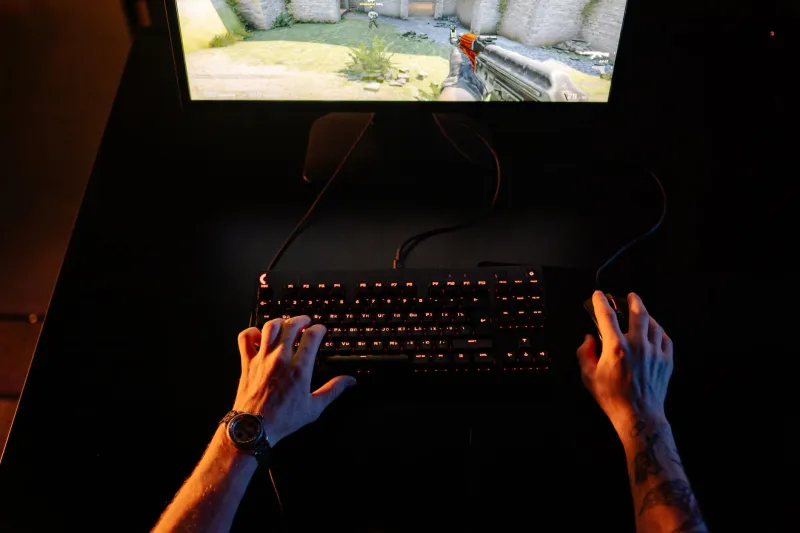
If that's been your experience over the past few months, you're not alone, and you're not wrong. A combination of weapon balance patches and backend engine updates across the major titles — CS2, Valorant, and to a lesser extent The Finals — have quietly shifted how recoil and spray patterns behave in ways that the patch notes either buried in technical language or didn't fully explain at all.
This isn't a conspiracy. It's just how live-service game development works. But it's costing players ranked matches, and it's costing some teams tournament results. Let's break down what actually changed and what the smart money is doing about it.
The Patch Notes Didn't Tell You the Whole Story
Game developers have a habit of describing mechanical changes in ways that sound minor on paper. "Adjusted first-bullet accuracy" or "slightly reduced recovery time" reads as a footnote. In practice, those changes cascade through muscle memory in ways that take weeks to fully surface.
In CS2 specifically, the shift from the Source 1 engine brought subtick input processing that changed how spray compensation interacts with movement. Players who spent years ingraining CS:GO spray patterns found that the timing of their horizontal compensation pulls needed to be recalibrated — not dramatically, but enough that the top of a spray started walking differently under pressure. Valve has continued to iterate on this, and each update has nudged things slightly.
In Valorant, Riot's balance team has been systematically adjusting rifle bloom and recovery curves. The Vandal in particular has seen quiet changes to its upper-spray behavior that punish the "panic hold" approach — where players would spray and slightly over-correct, relying on bloom to cluster shots anyway. That forgiveness window got tighter, and players who relied on it without knowing it are now getting punished.
Which Teams Adapted First — and How
The teams that picked up on these shifts fastest weren't necessarily the ones with the best individual aimers. They were the ones with the most disciplined review processes.
Organizations like Team Liquid and Cloud9 have coaching staff whose entire job includes reviewing demo footage specifically for mechanical drift — the gradual, almost invisible way that player spray patterns diverge from optimal over time. When a patch lands, their analysts pull pre- and post-patch spray data and compare. They're not waiting to feel the difference. They're measuring it.
Smaller orgs and semi-pro teams don't have that infrastructure, which is why you saw a noticeable skill gap open up at the mid-tier of competition in the months following the most recent major updates. The teams that felt something was off and kept grinding the same routines fell behind. The teams that stopped, reassessed, and deliberately rebuilt their spray habits in the new environment gained ground.
The lesson here isn't that you need a coaching staff. It's that you need to be willing to treat your own mechanics like they're hypotheses, not facts.
What's Actually Obsolete Now
Let's be specific about what training habits no longer serve you the way they used to.
Static spray training on aim trainers: Tools like Aim Lab and KovaaK's are excellent for building raw aim, but their spray patterns are not always synchronized with the current in-game state of weapons. If you're running spray control scenarios on an aim trainer that hasn't updated its weapon data recently, you're reinforcing patterns that don't match live servers. Verify when the weapon data was last updated before you grind it.
Over-relying on a single spray distance: The meta has shifted toward engagements that happen at slightly longer ranges across multiple maps in the current competitive pool. Spray control that's been trained almost exclusively at close-to-medium range is going to feel unstable when engagements open up. Train your spray termination — knowing when to stop spraying and tap-fire — at a wider variety of distances.
Ignoring crouch timing in spray sequences: Several of the recent recoil adjustments have changed how crouch-spraying interacts with accuracy recovery. In some cases it's more effective than before; in others, it's creating a window of vulnerability that opponents are learning to punish. Test this in a private server before you lean on it in ranked.
The New Fundamentals
Here's the practical reframe. Spray control in 2024's competitive environment rewards players who are adaptive over players who are consistent with an outdated pattern. That's a subtle but important distinction.
A few principles that hold up across the current meta:
-
Shorter controlled bursts are winning more gunfights than full mag sprays. The accuracy penalty windows are punishing longer sprays harder than they were twelve months ago. Five-to-eight round bursts with deliberate resets are consistently outperforming the spray-and-pray approach that used to be viable at medium range.
-
Reset timing has changed. The rhythm of spray-move-spray that experienced players internalized over years has shifted slightly. The movement input that resets your bloom needs to happen marginally earlier in the current engine state. This is small — we're talking frames — but it accumulates over a match.
-
Vertical compensation is being underweighted by most players. The horizontal pull is what players focus on because it's the flashier, more visible part of spray control. But recent patch changes have made vertical rise slightly more aggressive in the first several bullets of several rifles. If your headshots are landing in the chest during sprays, this is probably why.
What You Should Actually Do This Week
Stop grinding the same spray routine you've been running for six months and actually test your current state. Go into a private server, spray a full magazine at a wall, and film or screenshot the result. Compare it to the optimal pattern from a current, patch-accurate source. Then build your practice sessions around closing the gap between those two things — not around reinforcing what you already know.
The players who dominate next season won't necessarily be the ones who practiced the hardest. They'll be the ones who practiced the most honestly.